AI
Tech
Switzerland

background
Mantis is an AI-powered security camera system designed for environments where real-time decision-making and human safety are critical. The platform combines intelligent video analysis with operational workflows used by security teams and facility operators in high-risk, real-world contexts such as ski resorts and industrial sites.
Unlike consumer surveillance tools, Mantis must deliver decisions that are not only accurate, but also understandable and actionable in the moment. The core challenge was to design an interface that makes complex AI behavior transparent and trustworthy, while maintaining clarity under pressure and minimizing cognitive load during critical situations.
design role
I led the end-to-end product design of the Mantis platform, working closely with engineering and domain experts to shape a system where usability and human safety were equally critical. My responsibility spanned UX strategy, interaction design, and interface clarity across both real-time monitoring and operational management workflows.
Given the life-critical nature of the product, design decisions focused on reducing ambiguity, supporting rapid comprehension, and ensuring operators could confidently understand and act on AI-driven alerts. Every interaction was designed to prioritize trust, predictability, and human control over automation.
Role:
Lead Product Designer
Focus:
UX Strategy, AI Explainability, Interaction Design, Safety-Critical Systems
Design direction
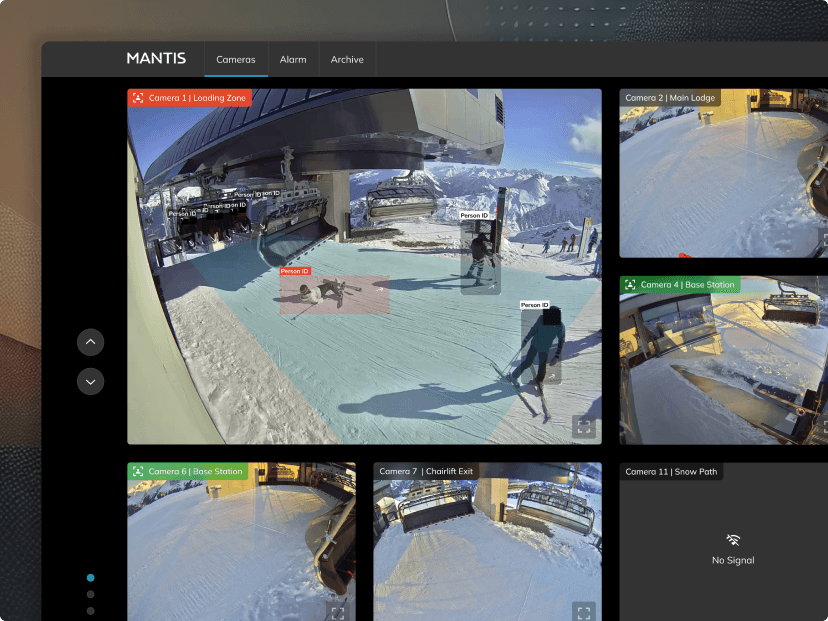
The design direction for Mantis focused on clarity under pressure. The platform operates in safety-critical environments where operators must understand what is happening instantly and act with confidence. The interface was designed to surface only what matters in the moment reducing noise, ambiguity, and cognitive load while maintaining full situational awareness.
Visual decisions prioritized restraint and precision over expressiveness. Clear hierarchy, predictable patterns, and explainable AI behaviors ensured that alerts, detections, and system decisions were easy to interpret and trust. The goal was not to impress visually, but to create an interface that feels reliable, calm, and accountable. Especially in moments where human response directly impacts safety.
Key interfaces
The Mantis platform was designed around moments where decisions matter. Interfaces were shaped not by feature count, but by the operator’s ability to quickly assess situations, trust the system, and respond without hesitation.
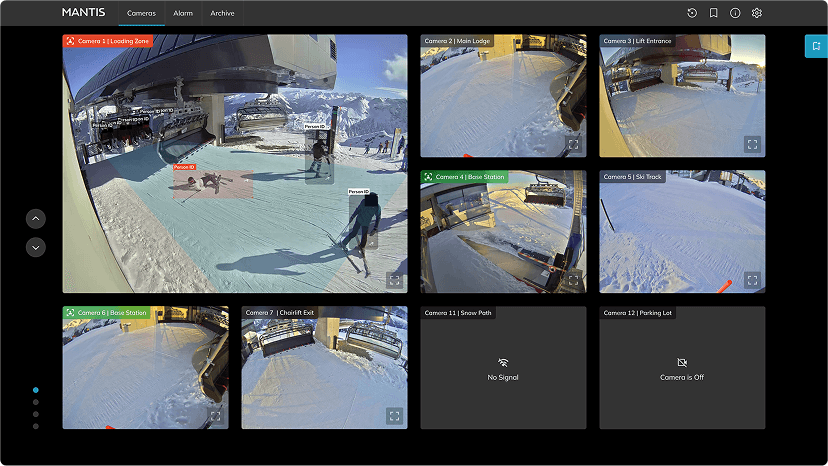
Each core screen balances real-time data with restraint surfacing only what is essential in the moment, while keeping deeper context accessible without distraction.
The live monitoring view acts as the operational core of the system. Multiple camera feeds are presented in a calm, predictable layout, allowing operators to maintain situational awareness across large physical spaces. Visual hierarchy and motion restraint ensure attention is drawn only when something requires action.
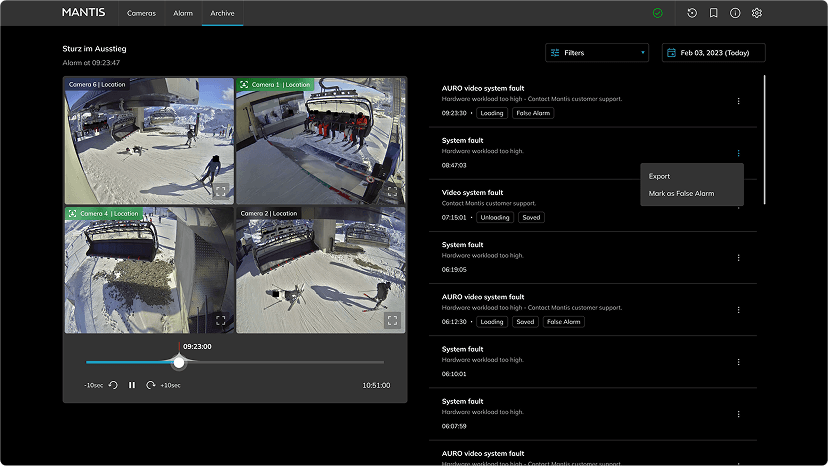
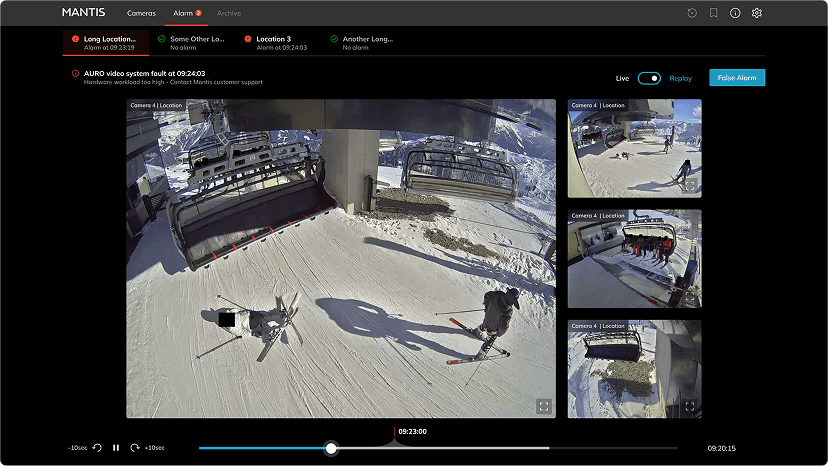
Alerts were designed to interrupt without overwhelming. Events are clearly classified and time-stamped, helping operators understand not just what happened, but when and why. This reduces false urgency while supporting confident, informed responses in safety-critical scenarios.
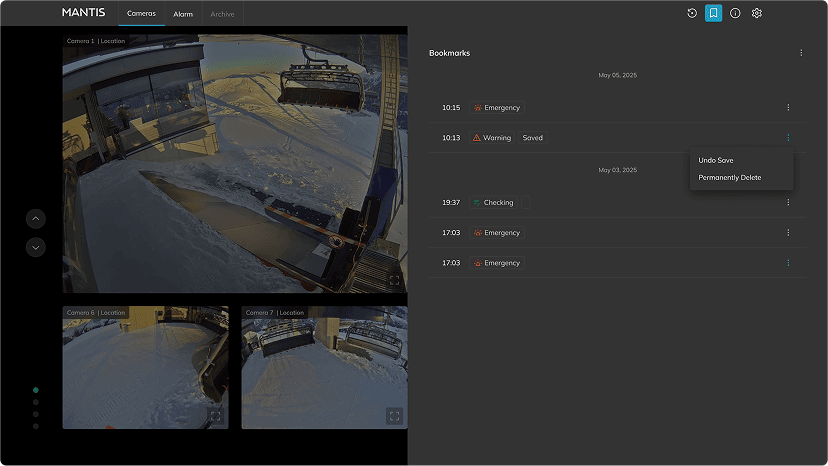
Configuration and review interfaces prioritize clarity and reversibility. Whether adjusting system settings or reviewing recorded footage, the experience remains consistent and deliberate minimizing the risk of error while maintaining full control over the system’s behavior.
outcome
The platform was validated through internal reviews and hands-on usage by managers and operators throughout the rollout. Feedback was continuously incorporated during development, resulting in a system that felt intuitive, reliable, and easy to operate under real-world conditions.
100% of users intuitively understood the purpose of each page and primary action.
95% found replay controls clear and easy to navigate during incident review.
100% responded positively to the flexible camera layout and grid configuration.
91% valued the clarity and functionality of archive and event logs.
100% reported a smooth and confident experience navigating the platform.
90% appreciated the level of system customization available for different operational needs.
Overall, the interface successfully reduced cognitive load while supporting fast decision-making in safety-critical environments.

Tobias
co-founder, head of product