Home
Automation
Belgium
background
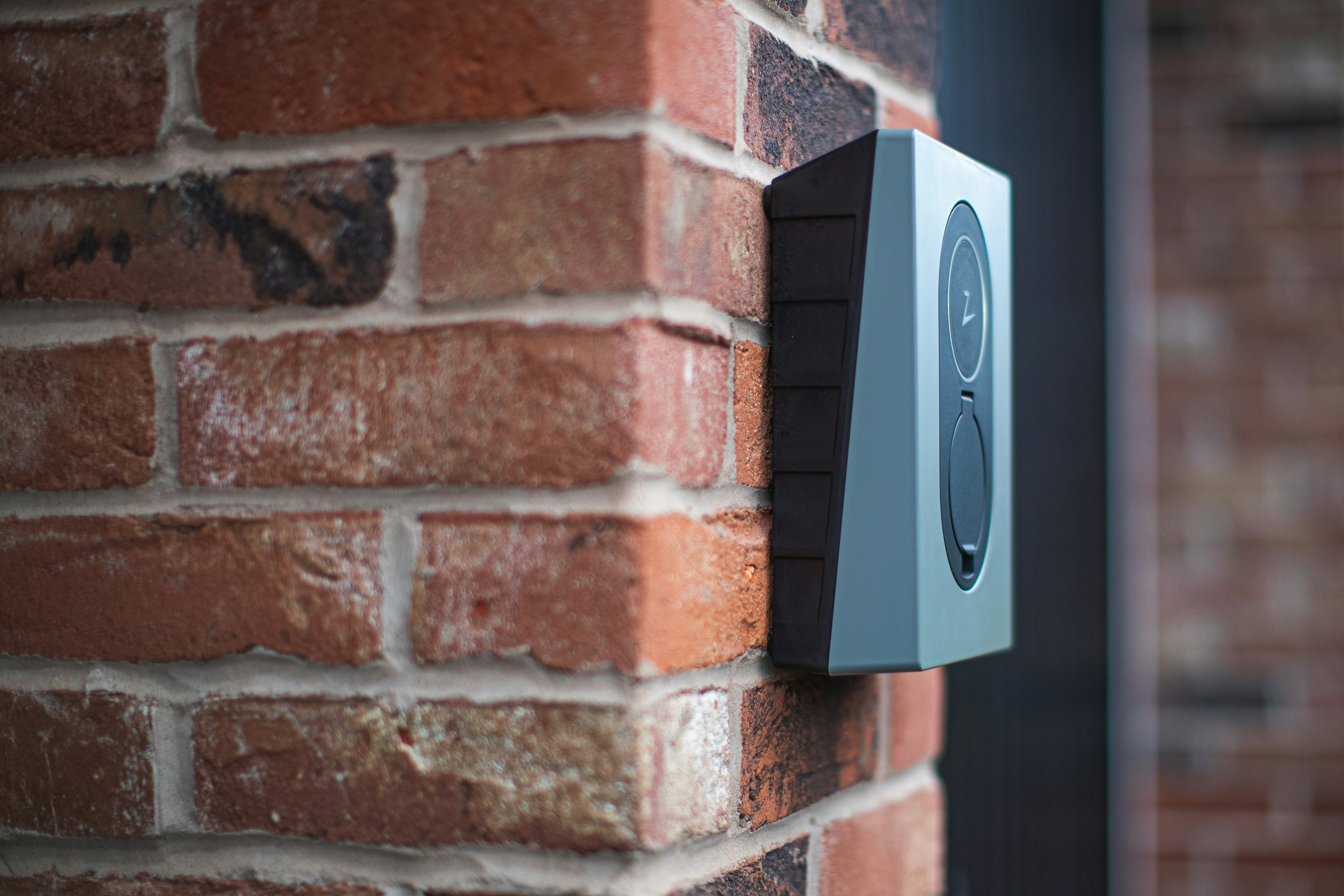
Elizze is a smart energy management platform designed to help households monitor, control, and optimize their energy consumption in real time. Paired with a physical control module installed at home, the system gives users direct visibility into how energy flows in and out of their household and how individual devices contribute to overall consumption.
Rather than relying on automation alone, Elizze focuses on clarity and control. Users can see live energy data, understand usage patterns, and take immediate action such as switching devices or plugs on and off directly from a single, central dashboard.
design role
I led the end-to-end product design of Elizze, working closely with engineering and stakeholders to shape a mobile-first experience for real-time energy monitoring and control. My role covered UX strategy, interaction design, and visual direction ensuring complex energy data could be understood and acted upon instantly.
The core challenge was to translate live energy flows into a fast-to-grasp interface without technical complexity. Every design decision focused on clarity, responsiveness, and user confidence, enabling homeowners to monitor consumption, control devices, and make smarter energy decisions in just a few clicks.
Role:
Principal Product Designer
Focus:
UX Strategy, Interaction Design, Real-Time Dashboards, Smart Home Interfaces
Design direction
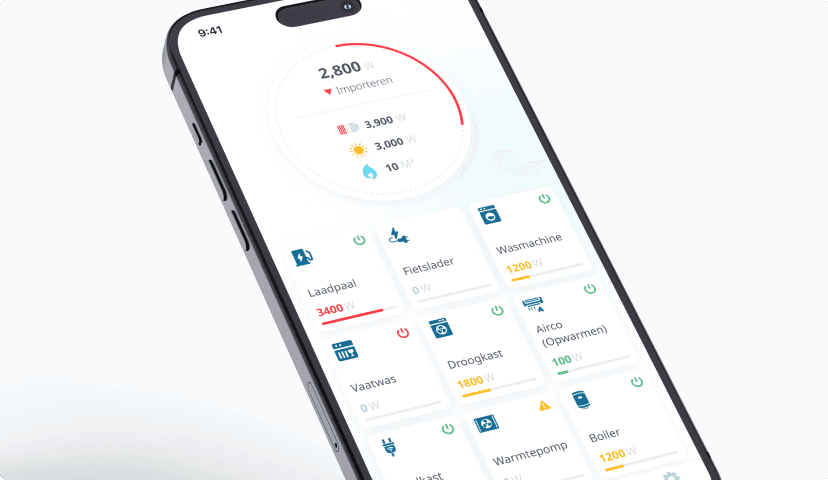
Early research revealed a clear gap in the smart home market: existing solutions were either too complex for everyday users or too fragile to trust. The app was designed primarily for a mature, non-technical audience who valued reliability, security, and clarity over advanced customization or visual flair.
The design direction focused on reducing friction at every step simple setup, transparent system status, and immediate feedback when something goes wrong. Visual choices emphasized calmness and stability, while interactions were shaped to feel predictable and reassuring. The goal was not to impress users with features, but to help them feel confident, in control, and informed at all times.
Key interfaces
The Elizze interface was designed to support everyday decision-making with minimal cognitive effort. From first-time setup to daily energy monitoring, each screen prioritizes clarity, predictable behavior, and fast access to essential controls.
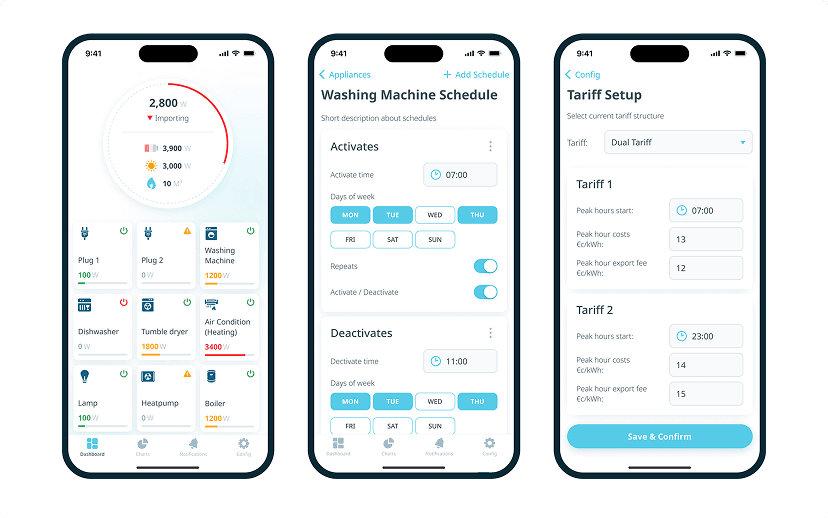
A major challenge was the initial device connection flow. Since most users were not technically inclined, the setup experience was broken into small, clearly guided steps that reduced anxiety and prevented configuration errors. The goal was to make installation feel approachable rather than technical.
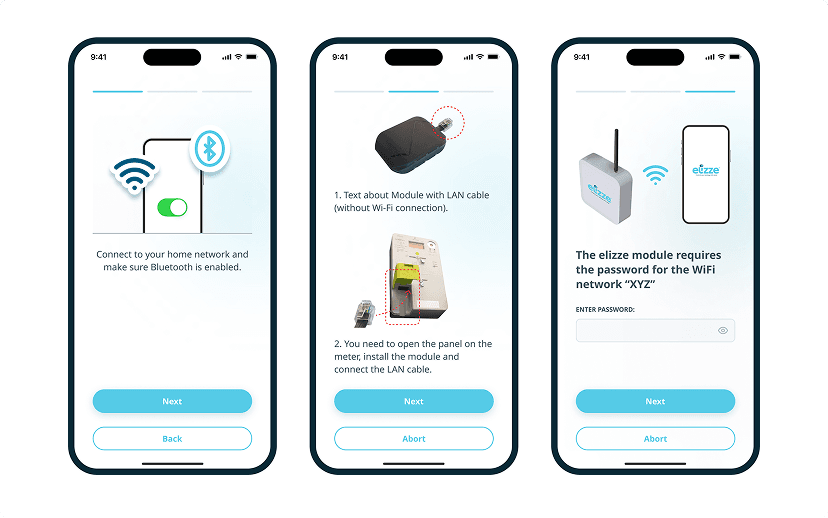
At the core of the product is a real-time energy overview that helps users understand consumption, device impact, and system behavior at a glance. Reporting and configuration tools were designed as natural extensions of this view, allowing users to review patterns, adjust settings, and optimize energy usage without breaking context.
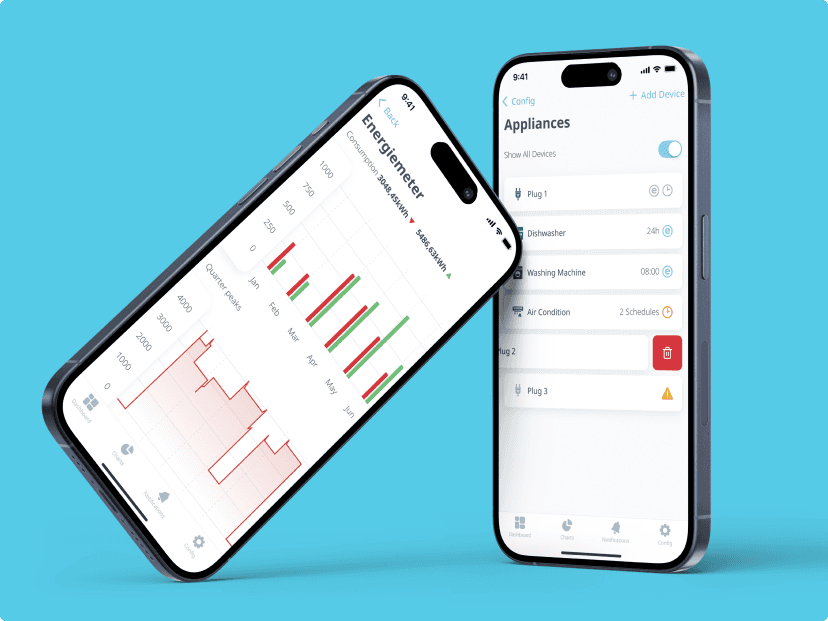
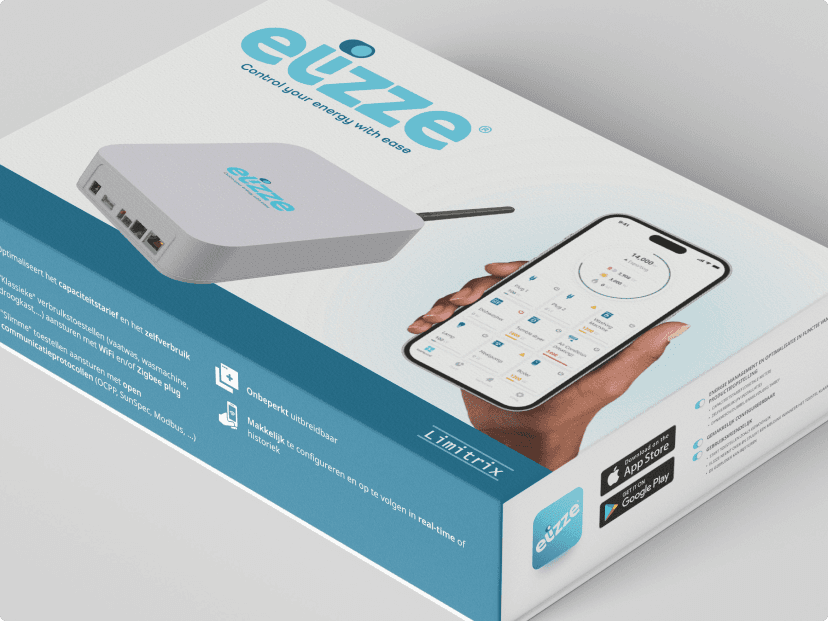
Beyond the mobile experience, the system required consistency across touchpoints. A scalable component library ensured interface reliability as the product evolved, while supporting assets including packaging, print materials, and a marketing website helped introduce the product clearly and build trust before installation.
outcome
Following the initial beta release, the product demonstrated clear improvements in usability and user confidence. The simplified setup flow and clearer dashboard structure significantly reduced friction for non-technical users and improved day-to-day interaction with the system.
Early testing and user feedback highlighted measurable gains across core usage metrics, confirming that the design direction supported faster task completion, fewer errors, and higher overall satisfaction.
Cut task completion time by 37%
Lifted CSAT from 3/10 to 9/10
Reduced setup errors through a fully guided, step-by-step device connection flow

Jan, Bram
founders